Original: $32.02
-70%$32.02
$9.61The Story
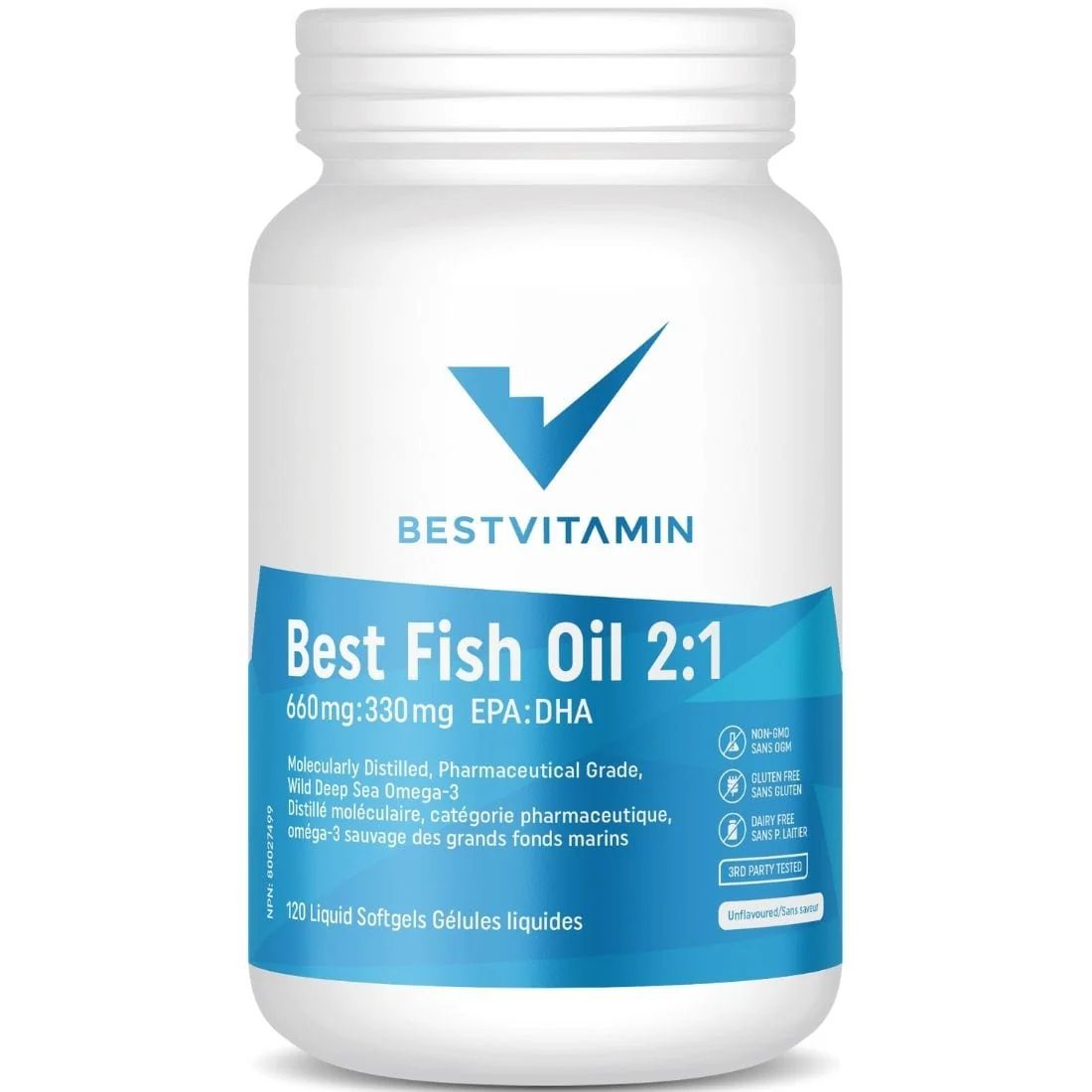
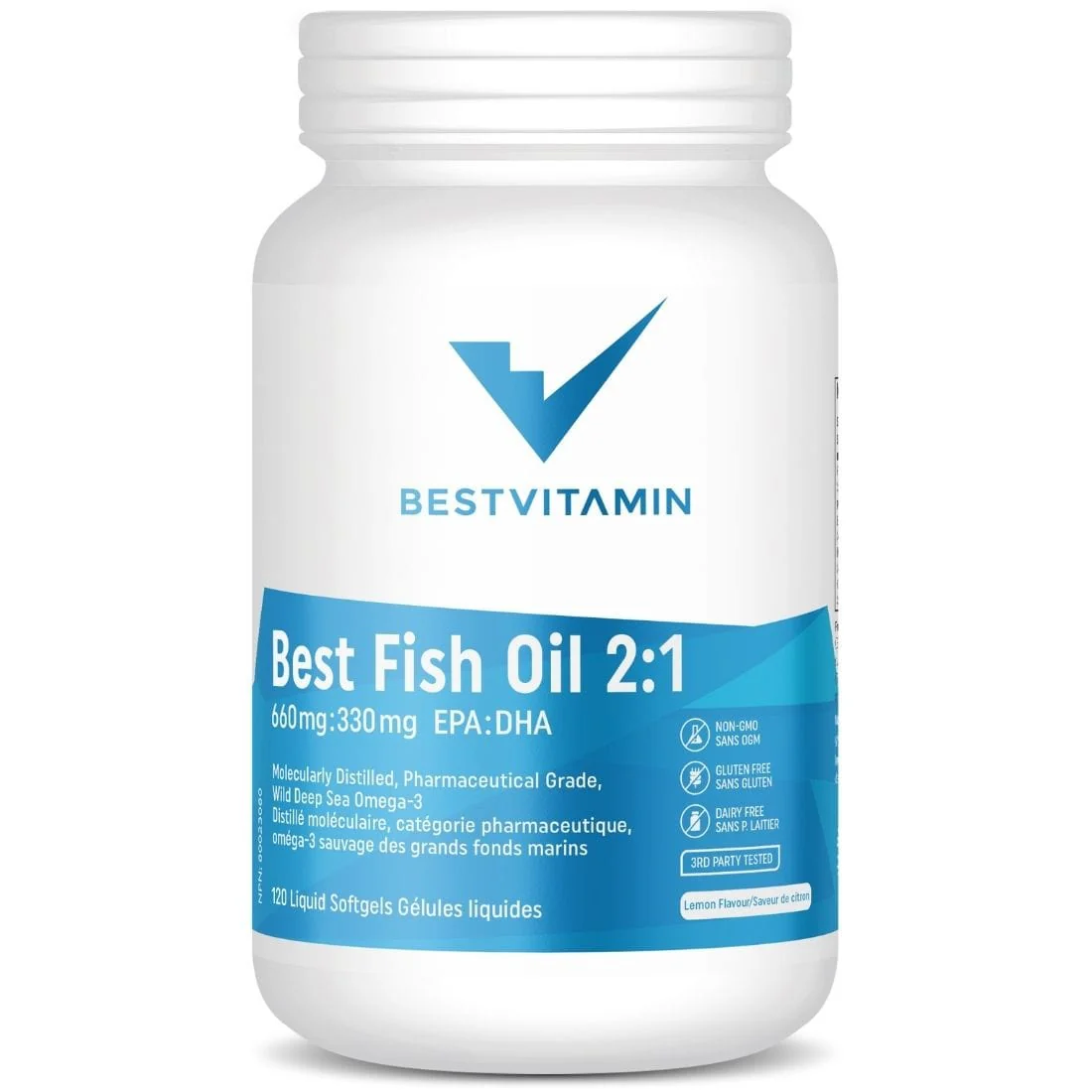
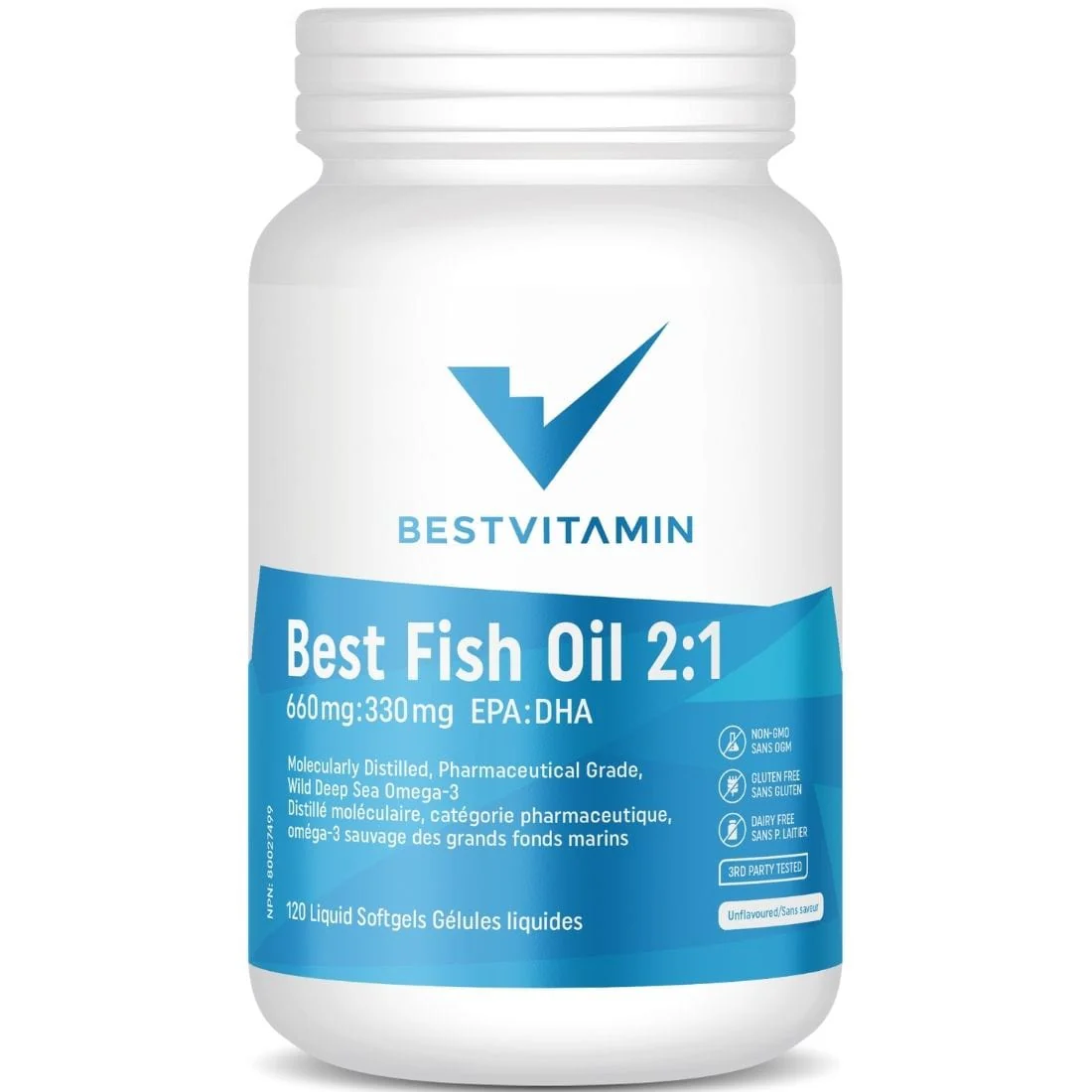
BestVitamin Best Fish Oil 2:1 (EPA: DHA)
BestVitamin Best Fish Oil 2:1 (EPA: DHA), 120 Softgels is a fish oil of exceptional purity, standardized to the highest concentration. Each softgel provides 990 mg of EPA and DHA in a 2:1 ratio. Omega-3 EPA and DHA support cardiovascular health by promoting healthy triglyceride levels; support joint tissue health by supporting a healthy inflammatory response; and support optimal cognitive health and brain function.
BestVitamin Best Fish Oil 2:1 (EPA: DHA), 120 Softgels contains vitamin E as an antioxidant and is hermetically sealed to be secure against the entry of oxygen, ensuring maximum purity, freshness, and stability of the oil through to expiration. Third-party test results guarantee Trident SAP 66:33™ is free of heavy metals, PCBs, pesticides, volatile organics, and other impurities.
WHAT ARE OMEGA‑3 FATTY ACIDS?
Omega-3 fatty acids are long-chain polyunsaturated fatty acids and are considered essential fatty acids because they cannot be synthesized by humans, thus must be obtained from the diet.[1] Fish and other marine life are rich sources of a special class of long-chain omega-3 fatty acids, eicosapentaenoic acid (EPA) and docosahexaenoic acid (DHA).[1] Plant food and vegetable oils, such as flaxseed, canola, and soybean oil, lack EPA and DHA; however, they do contain the intermediate-chain omega-3 fatty acid α-linolenic acid (ALA). Over the last few decades, numerous health benefits have been attributed to the consumption of the omega-3 fatty acid family, ALA, EPA, and DHA.[1]
THE OMEGA‑6–TO–OMEGA‑3 BALANCE
The contemporary Western diet is high in omega-6 fatty acids (omega-6 FAs) and deficient in omega-3 fatty acids (omega-3 FAs).[2] This ultimately leads to an imbalance in the cellular concentration of omega-6–to–omega-3 FAs. Although omega-3 FAs are structurally and functionally distinct from the omega-6 FAs, each is metabolized competitively to form eicosanoids, such as thromboxanes (TX), prostaglandins (PG), and leukotrienes (LT).[2][3] Eicosanoids have hormone-like effects and play an important role in cellular activity. Arachidonic acid (AA), a long-chain omega-6 FA, is the precursor for the harmful eicosanoids that promote inflammation (PGE2, LTB4 ), and stimulate platelet aggregation (TXA2).[3][4] Conversely, EPA is the precursor for the anti-inflammatory and antiaggregatory eicosanoids PGE3, LTB5, and TXA3. By increasing omega-3 FA intake, EPA and DHA are incorporated into cell-membrane phospholipids at the expense of AA, and a balance between the omega-6 and omega-3 FAs is returned, thus promoting healthy cellular structure, fluidity, and activity.[3][4][5]
RECOMMENDED OMEGA‑3 INTAKES
Healthy Adults:[6]
Fish oil . . . . . . . . . . . . . . . . . . . . . . . . . . . . . . . . . . 1–2 g/d
Coronary Disease Patients:[7]
EPA+DHA . . . . . . . . . . . . . . . . . . . . . . . . . . . . . . . . . ~1 g/d
Hypertriglyceridemia:[7]
EPA+DHA . . . . . . . . . . . . . . . . . . . . . . . . . . . . . . . . 2–4 g/d
Neurological Disorders:[8]
EPA . . . . . . . . . . . . . . . . . . . . . . . . . . . . . . . . . . . . . 1–2 g/d
Inflammatory Disorders (rheumatoid arthritis):[4]
EPA+DHA . . . . . . . . . . . . . . . . . . . . . . . . . . . . . . . . . . 3 g/d
SAFETY OF OMEGA‑3 SUPPLEMENTATION
In 2012 the European Food Safety Authority has advised that a dose of up to 5g/day of EPA and DHA for a period of 16 weeks in supplement form is considered safe for adults and not associated with any lipid peroxidative changes or adverse events in relation to CVD risk. Omega-3 FAs are thus safe and well-tolerated and can be taken with a wide variety of other supplements.[7][10] Since omega-3 FAs are natural blood thinners, patients taking high dosages of aspirin or medicinal blood thinners should consult
their health-care professional before use.[10]
NATURAL RATIO AND FORM
The majority of scientific literature that reports the health benefits of omega-3 FAs is based on fish-oil research in which the oils provide their natural fatty acid ratios and form.[11] Fish oils are most commonly available in a standard 18:12 ratio (18% EPA and 12% DHA) or a concentrated 2:1 ratio and supplied in triglyceride or ethyl ester form. Both triglyceride and ethyl ester forms are highly bioavailable and stable.[11]
OMEGA‑3 FATTY ACIDS AND NUTRITION RESEARCH
Cardiovascular Disease
Main mechanisms through which EPA and DHA reduce the risk of cardiovascular disease (CVD) and sudden death include a reduction in malignant ventricular arrhythmias, suppression of blood clotting and atherosclerosis, improvement in arterial wall tone, and anti-inflammatory effects.[1][12] Intake of 1 g/day of EPA+DHA in CVD patients can exert antiarrhythmic, hypolipidemic and antithrombotic effects, and at least 500 mg/day in patients without CVD can have cardioprotective effects.
Details & Craftsmanship
Every detail has been carefully considered to bring you the perfect product.
Details & Craftsmanship
Every detail has been carefully considered to bring you the perfect product.
Description
BestVitamin Best Fish Oil 2:1 (EPA: DHA)
BestVitamin Best Fish Oil 2:1 (EPA: DHA), 120 Softgels is a fish oil of exceptional purity, standardized to the highest concentration. Each softgel provides 990 mg of EPA and DHA in a 2:1 ratio. Omega-3 EPA and DHA support cardiovascular health by promoting healthy triglyceride levels; support joint tissue health by supporting a healthy inflammatory response; and support optimal cognitive health and brain function.
BestVitamin Best Fish Oil 2:1 (EPA: DHA), 120 Softgels contains vitamin E as an antioxidant and is hermetically sealed to be secure against the entry of oxygen, ensuring maximum purity, freshness, and stability of the oil through to expiration. Third-party test results guarantee Trident SAP 66:33™ is free of heavy metals, PCBs, pesticides, volatile organics, and other impurities.
WHAT ARE OMEGA‑3 FATTY ACIDS?
Omega-3 fatty acids are long-chain polyunsaturated fatty acids and are considered essential fatty acids because they cannot be synthesized by humans, thus must be obtained from the diet.[1] Fish and other marine life are rich sources of a special class of long-chain omega-3 fatty acids, eicosapentaenoic acid (EPA) and docosahexaenoic acid (DHA).[1] Plant food and vegetable oils, such as flaxseed, canola, and soybean oil, lack EPA and DHA; however, they do contain the intermediate-chain omega-3 fatty acid α-linolenic acid (ALA). Over the last few decades, numerous health benefits have been attributed to the consumption of the omega-3 fatty acid family, ALA, EPA, and DHA.[1]
THE OMEGA‑6–TO–OMEGA‑3 BALANCE
The contemporary Western diet is high in omega-6 fatty acids (omega-6 FAs) and deficient in omega-3 fatty acids (omega-3 FAs).[2] This ultimately leads to an imbalance in the cellular concentration of omega-6–to–omega-3 FAs. Although omega-3 FAs are structurally and functionally distinct from the omega-6 FAs, each is metabolized competitively to form eicosanoids, such as thromboxanes (TX), prostaglandins (PG), and leukotrienes (LT).[2][3] Eicosanoids have hormone-like effects and play an important role in cellular activity. Arachidonic acid (AA), a long-chain omega-6 FA, is the precursor for the harmful eicosanoids that promote inflammation (PGE2, LTB4 ), and stimulate platelet aggregation (TXA2).[3][4] Conversely, EPA is the precursor for the anti-inflammatory and antiaggregatory eicosanoids PGE3, LTB5, and TXA3. By increasing omega-3 FA intake, EPA and DHA are incorporated into cell-membrane phospholipids at the expense of AA, and a balance between the omega-6 and omega-3 FAs is returned, thus promoting healthy cellular structure, fluidity, and activity.[3][4][5]
RECOMMENDED OMEGA‑3 INTAKES
Healthy Adults:[6]
Fish oil . . . . . . . . . . . . . . . . . . . . . . . . . . . . . . . . . . 1–2 g/d
Coronary Disease Patients:[7]
EPA+DHA . . . . . . . . . . . . . . . . . . . . . . . . . . . . . . . . . ~1 g/d
Hypertriglyceridemia:[7]
EPA+DHA . . . . . . . . . . . . . . . . . . . . . . . . . . . . . . . . 2–4 g/d
Neurological Disorders:[8]
EPA . . . . . . . . . . . . . . . . . . . . . . . . . . . . . . . . . . . . . 1–2 g/d
Inflammatory Disorders (rheumatoid arthritis):[4]
EPA+DHA . . . . . . . . . . . . . . . . . . . . . . . . . . . . . . . . . . 3 g/d
SAFETY OF OMEGA‑3 SUPPLEMENTATION
In 2012 the European Food Safety Authority has advised that a dose of up to 5g/day of EPA and DHA for a period of 16 weeks in supplement form is considered safe for adults and not associated with any lipid peroxidative changes or adverse events in relation to CVD risk. Omega-3 FAs are thus safe and well-tolerated and can be taken with a wide variety of other supplements.[7][10] Since omega-3 FAs are natural blood thinners, patients taking high dosages of aspirin or medicinal blood thinners should consult
their health-care professional before use.[10]
NATURAL RATIO AND FORM
The majority of scientific literature that reports the health benefits of omega-3 FAs is based on fish-oil research in which the oils provide their natural fatty acid ratios and form.[11] Fish oils are most commonly available in a standard 18:12 ratio (18% EPA and 12% DHA) or a concentrated 2:1 ratio and supplied in triglyceride or ethyl ester form. Both triglyceride and ethyl ester forms are highly bioavailable and stable.[11]
OMEGA‑3 FATTY ACIDS AND NUTRITION RESEARCH
Cardiovascular Disease
Main mechanisms through which EPA and DHA reduce the risk of cardiovascular disease (CVD) and sudden death include a reduction in malignant ventricular arrhythmias, suppression of blood clotting and atherosclerosis, improvement in arterial wall tone, and anti-inflammatory effects.[1][12] Intake of 1 g/day of EPA+DHA in CVD patients can exert antiarrhythmic, hypolipidemic and antithrombotic effects, and at least 500 mg/day in patients without CVD can have cardioprotective effects.